

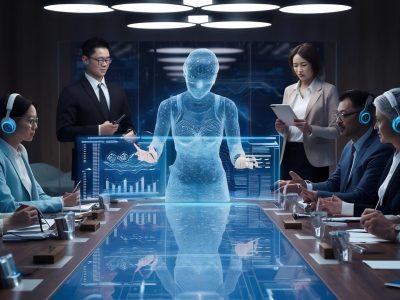


The workplace is at a turning point. Digital expectations are rising faster than most organisations can adapt, and employees increasingly judge their jobs not by perks or pay, but by the quality of their everyday technology experiences. The traditional divide between HR and IT is already showing its age, as companies recognise that people strategy and technology strategy must now operate as one. In this changing landscape, leaders cannot afford to wait and see.
From the growing impact of digital friction to the evolution of well-being and the shift from AI fear to AI confidence, the signals are clear: 2026 will demand a different kind of leadership. In the following article, TeamViewer’s Global Chief Human Resources Officer and Group General Counsel, Kai Werner, maps out the trends that will define this new era – and the steps organisations must take to prepare for it.
Prediction: The HR-IT divide will disappear
In 2026, the traditional boundaries between HR and IT departments will dissolve as organisations recognise that these functions are inseparable in modern workplaces. The entire workflow will encompass all processes throughout departments from both tech and HR perspectives, with the question shifting from replacing humans through technology to enabling humans through technology to perform better. Companies will bring the chief technology and chief human officer roles closer together or even merge them, acknowledging that employee experience and technology strategy cannot exist independently.
HR leaders must start thinking fully digitally or risk becoming obsolete. Begin establishing formal collaboration structures with IT departments, focusing on joint decision-making for technology implementations. Leaders must prioritise understanding how AI agents and human workers will coexist in organisations and develop integrated workflows that account for both. Businesses should evaluate whether their leadership structure supports this convergence.
Companies will bring the chief technology and chief human officer roles closer together or even merge them, acknowledging that employee experience and technology strategy cannot exist independently.
— Kai Werner
Prediction: Digital friction will drive employee turnover
The quality of digital workplace experiences will emerge as a leading factor in employee retention decisions, surpassing traditional considerations like compensation and benefits, such as healthcare or a company car. According to a new global research study issued by TeamViewer, 47% of workers say digital friction makes them frustrated and less satisfied with their jobs, and 28% have even considered quitting over IT dysfunction. As employees invest more heavily in personal technology and expect seamless digital experiences in their private lives, tolerance for workplace technology failures will reach zero. Organisations with fragmented communication channels, slow-loading systems, and poor interoperability across platforms will inevitably see their best talent leaving to join competing companies offering superior digital experiences.
Organisations must prioritise eliminating digital friction by investing in seamless, integrated technology stacks that enable effortless collaboration. They can do this by implementing proactive monitoring systems that identify and resolve IT issues before they impact employees — preventing problems rather than reacting to them. Most critically, it’s important to listen to what employees are saying about their technology experiences – employees are generally open in highlighting things that don’t work well and demanding things that could work better.
Prediction: Employee well-being will shift from perks to purpose
The era of well-being add-ons – gym memberships, free coffee and snacks, company cars – will give way to a more fundamental transformation. Employees will increasingly seek workplaces aligned with their life stage and personal values, where work itself becomes more enjoyable and fulfilling through excellent technology support. Organisations will need to create environments where employees want to be at that specific moment in their lives, rather than simply offering standardised benefits packages.
Businesses must move beyond traditional benefits and focus on making daily work genuinely exciting and rewarding. Invest in technology that makes tedious tasks feel meaningful rather than cumbersome – tools that support rather than frustrate, that enable rather than restrict. Develop your organisational culture around values that resonate emotionally, such as “we are family”, recognising that employees spend significant time at work and need to feel they genuinely want to be there. Listen closely to what employees say about what makes them happy at work – in my experience, 90% of the solution is simply paying attention to their feedback.
Organisations must create comprehensive AI guidelines and regulatory frameworks that clearly define what employees are allowed to do with AI tools and where boundaries exist.
Prediction: AI anxiety will transform into AI empowerment through trust-building
Initial fears about AI replacing jobs will evolve into widespread employee enthusiasm as organisations successfully demonstrate that AI augments rather than eliminates roles. Companies that invest in transparent AI guidelines, clear communication about where AI assists versus where humans lead, and personal development paths showing how employee roles evolve with AI integration will see a shift toward positive employee sentiment toward AI adoption.
Organisations must create comprehensive AI guidelines and regulatory frameworks that clearly define what employees are allowed to do with AI tools and where boundaries exist. Focus communication on how AI will handle routine tasks while freeing employees for more interesting, creative and strategic work. Develop personal development paths for every employee that show their evolving role alongside AI integration, emphasising new skills they’ll gain and increased value they’ll provide.